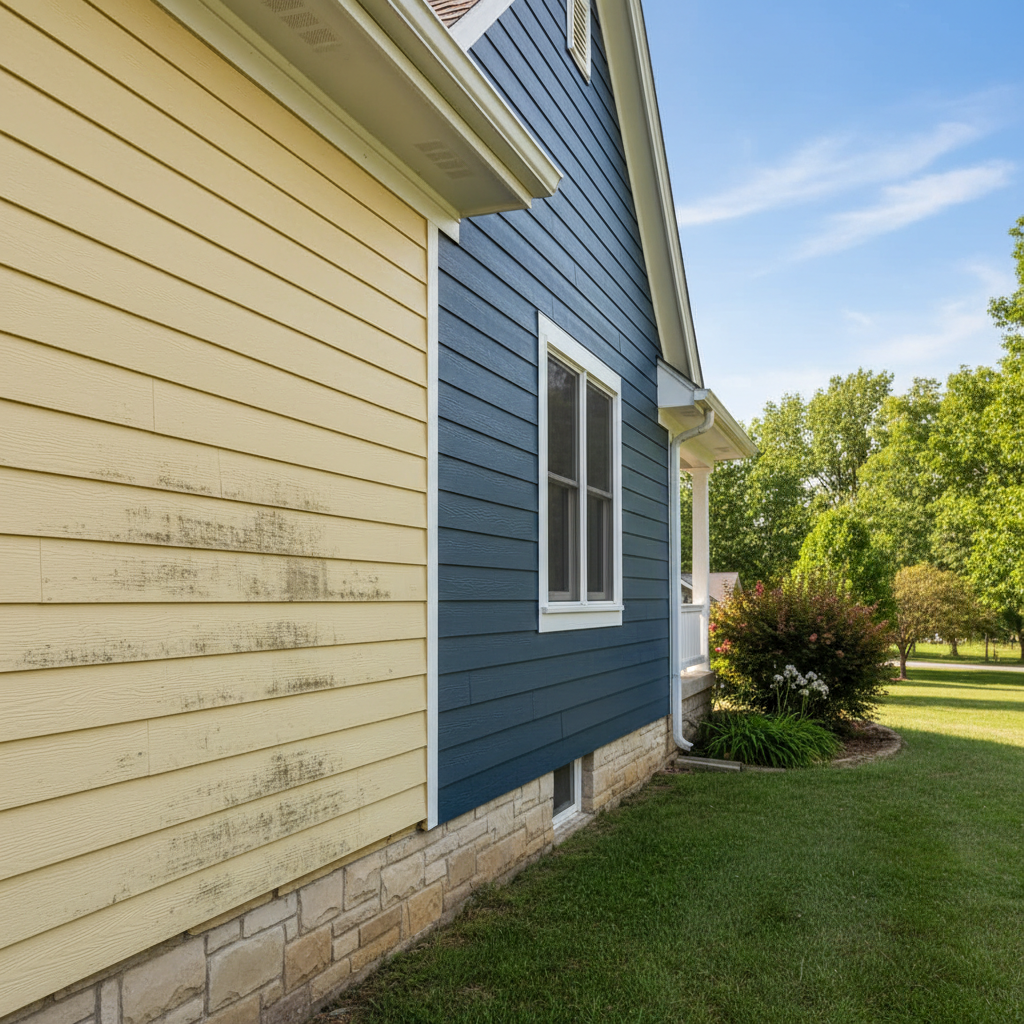
So, you're thinking about new siding for your house here in Lawrence. Good call. It's a big investment, and you want to get it right. Folks often ask me about the big two: vinyl siding versus fiber cement siding. Both are popular, but they're definitely not the same. Let's talk about what you really need to know before you pick one.
Vinyl Siding: The Budget-Friendly Workhorse
Vinyl siding has been around for a long time, and for good reason. It's usually the most affordable option upfront, which is a huge plus for many homeowners. When you're looking at cost, vinyl almost always wins the initial price battle.
What about durability? Modern vinyl is pretty tough. It's designed to withstand a lot of what Kansas weather throws at it – those crazy temperature swings, the hail we get sometimes, and even strong winds. It won't rot, rust, or get eaten by insects, which is a big improvement over old wood siding. The color is baked all the way through, so you don't have to worry about scratching off paint. However, it's not indestructible. Really severe hail or a direct, hard impact can crack or puncture it. And over many years, especially with our intense summer sun, some cheaper vinyl can start to fade or become brittle.
Maintenance is where vinyl really shines. You don't paint it. Ever. A good wash with a hose and maybe a soft brush every year or two is usually all it needs to look fresh. That's a huge time and money saver over the life of the siding.
Appearance-wise, vinyl has come a long way. You can get it in a ton of colors and styles, including some that mimic wood grain. It's generally pretty consistent and clean-looking. But let's be honest, it still looks like vinyl. If you're going for a really high-end, architectural look, it might not quite hit the mark. It can also sometimes look a little less rigid or substantial than other materials, especially on older homes in areas like Old West Lawrence, where you see a lot of original, solid construction.
Fiber Cement Siding: The Premium Performer
Now, let's talk about fiber cement. This stuff is a blend of cement, sand, and cellulose fibers. It's a different beast entirely, and it's gained a lot of popularity for good reason.
Cost-wise, fiber cement is more expensive than vinyl upfront. There's no getting around that. The material itself costs more, and it's also heavier and more labor-intensive to install, which adds to the overall price tag. So, if budget is your absolute top priority, vinyl might be your first thought.
But durability? This is where fiber cement really excels. It's incredibly tough. It resists rot, pests, fire, and those impacts that might ding vinyl. It stands up to hail, high winds, and our fluctuating temperatures like a champ. It's designed to last for decades, often coming with warranties that reflect that long lifespan – sometimes 30 to 50 years on the material itself. You won't see it warping or melting in the heat, and it holds its shape really well.
Maintenance for fiber cement is a bit more involved than vinyl. While it's low maintenance compared to traditional wood, it does need to be painted. Most manufacturers offer pre-painted options with long-lasting finishes, but eventually, you'll need to repaint it, just like a wood house. That typically means every 10-15 years, depending on the paint quality and sun exposure. You'll also want to clean it periodically, similar to vinyl, to keep it looking its best.
Appearance is another big win for fiber cement. It can be manufactured to perfectly mimic the look of natural wood siding, complete with grain patterns, or smooth, crisp lines. Because it's thicker and more rigid, it gives your home a more substantial, high-quality look and feel. You can get it in planks, shingles, and panels, offering a lot of design flexibility. If you're aiming for a classic, high-end aesthetic, fiber cement is hard to beat.
So, Which One Should You Choose for Your Lawrence Home?
Here's the deal: there's no single